Behind the Prints: Denim
I often share the “how I did it” part of my garment printing on Instagram. But there’s only so much you can say in a 30-second reel.
And while the quick format is fun, it rarely leaves space for deeper thoughts behind a piece—the hesitation before the first print, the small decisions along the way, the things I would do differently next time.
So for those of you who are a little more curious about the details of upcycling garments, I thought I’d start sharing more here on the blog. A closer look at selected pieces— what I used, how they evolved, and what I learned in the process.
Starting with Denim.
Here are three of my favourite denim pieces I’ve printed lately - and what they taught me.
1. The Improvised Jacket
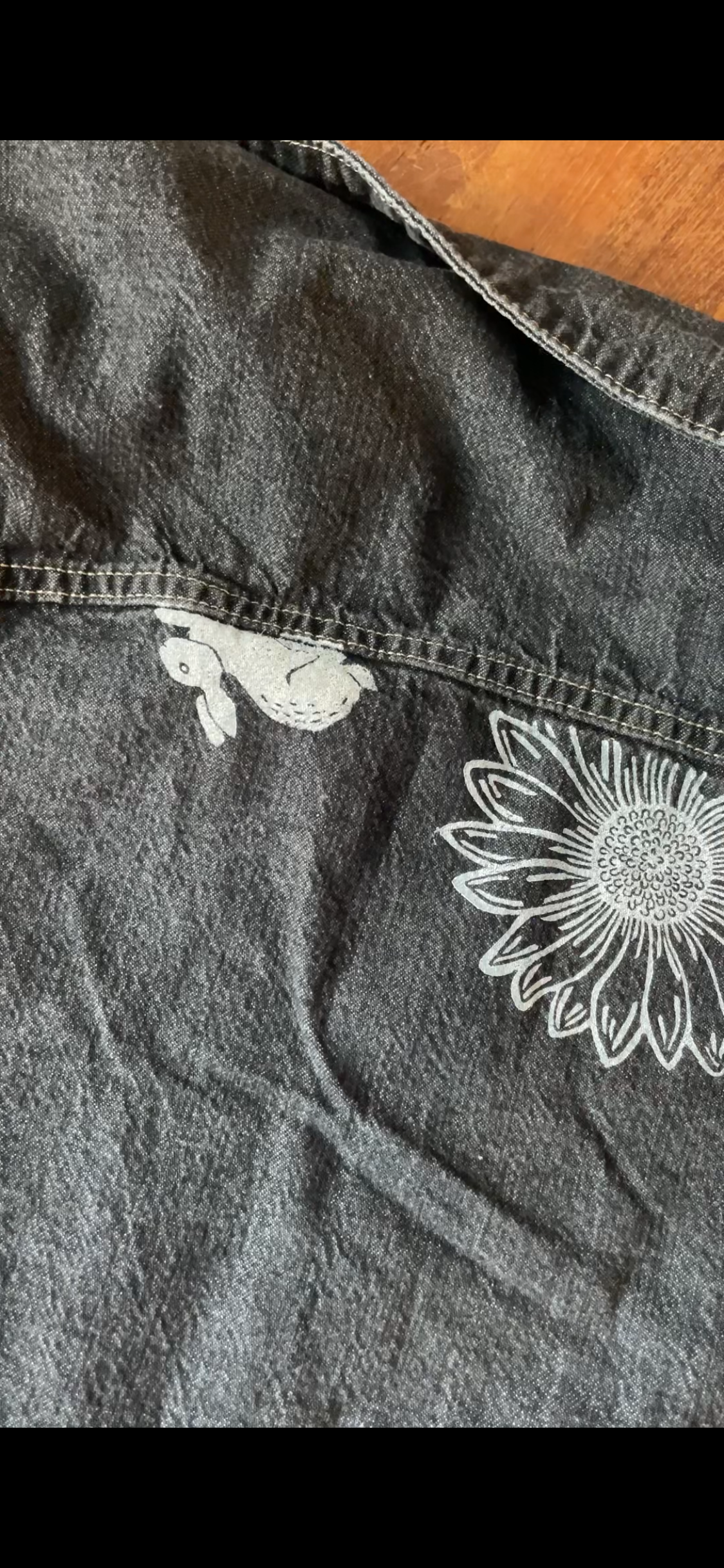
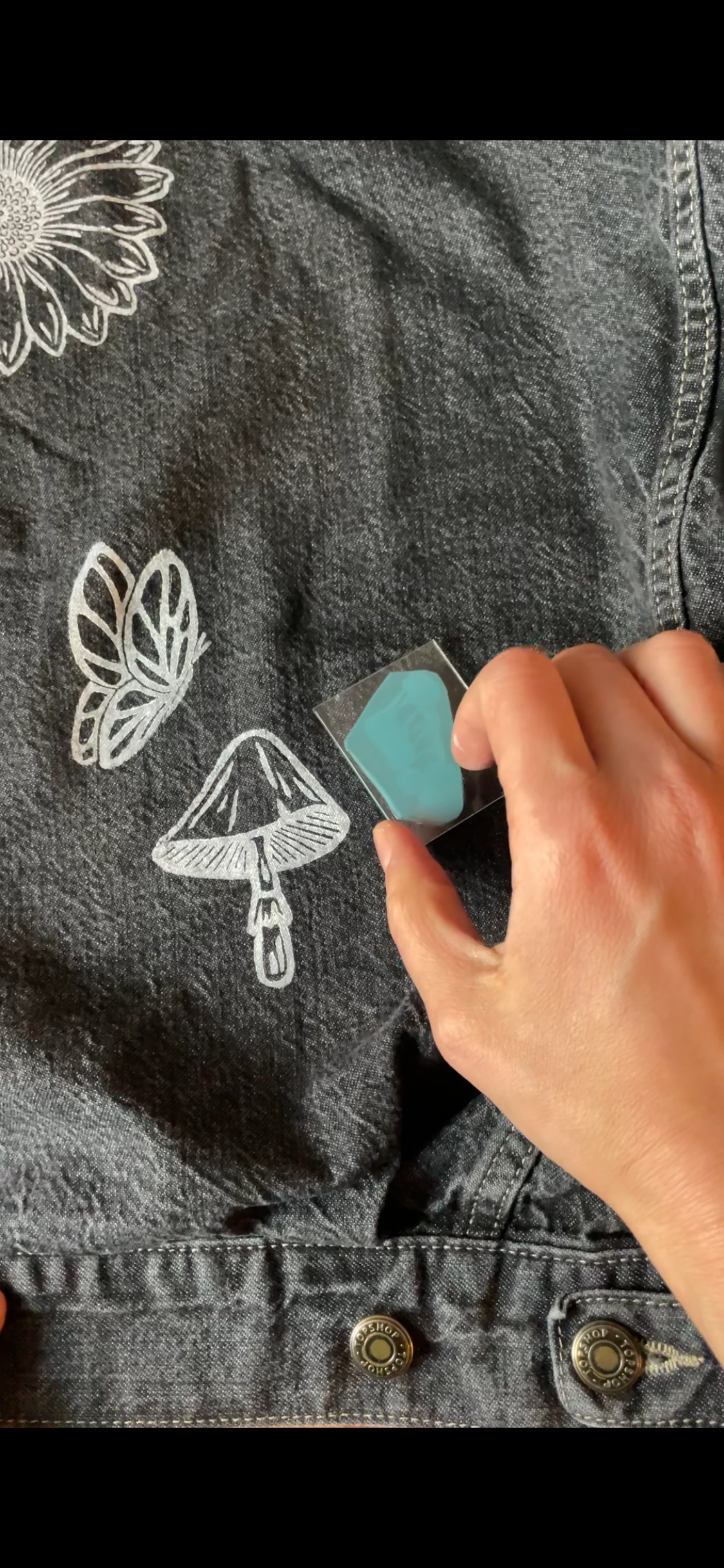
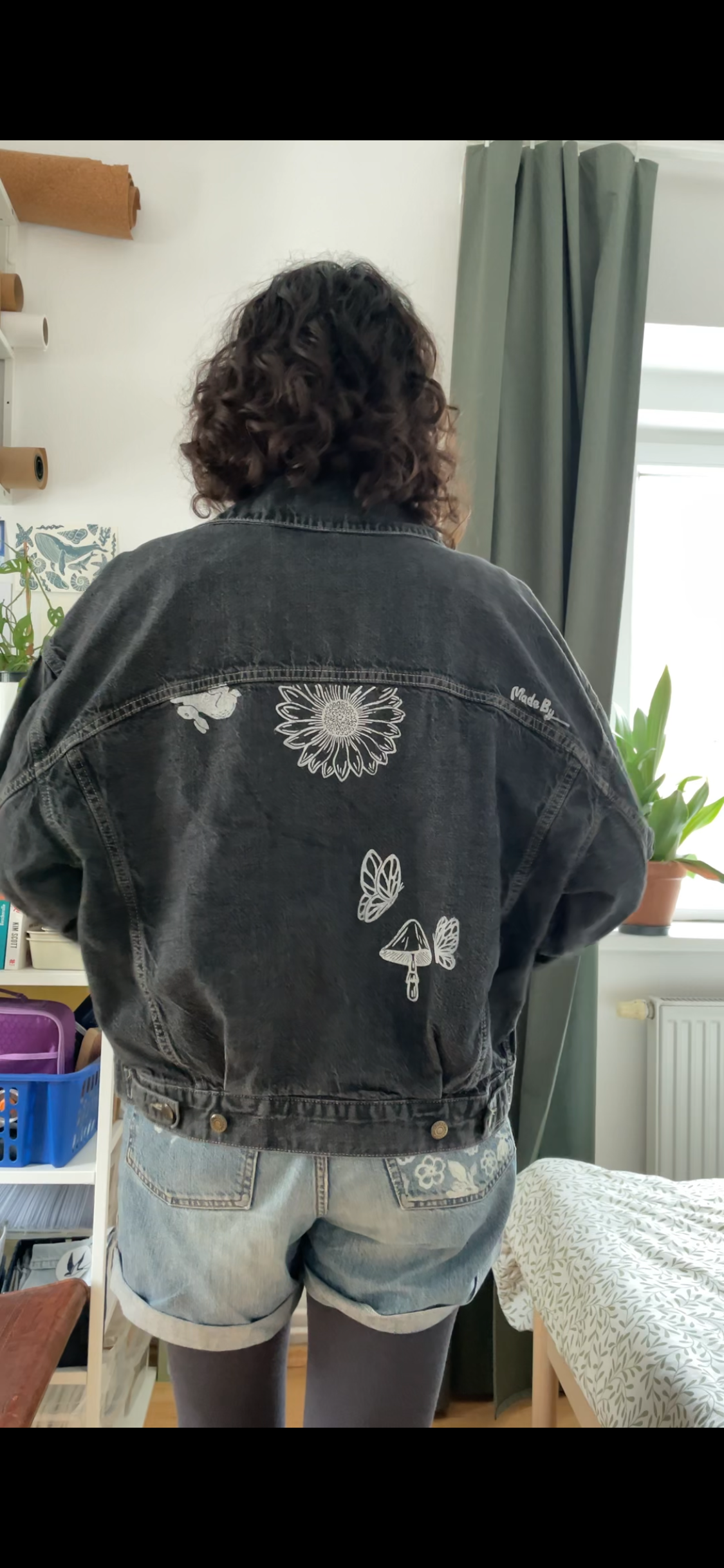
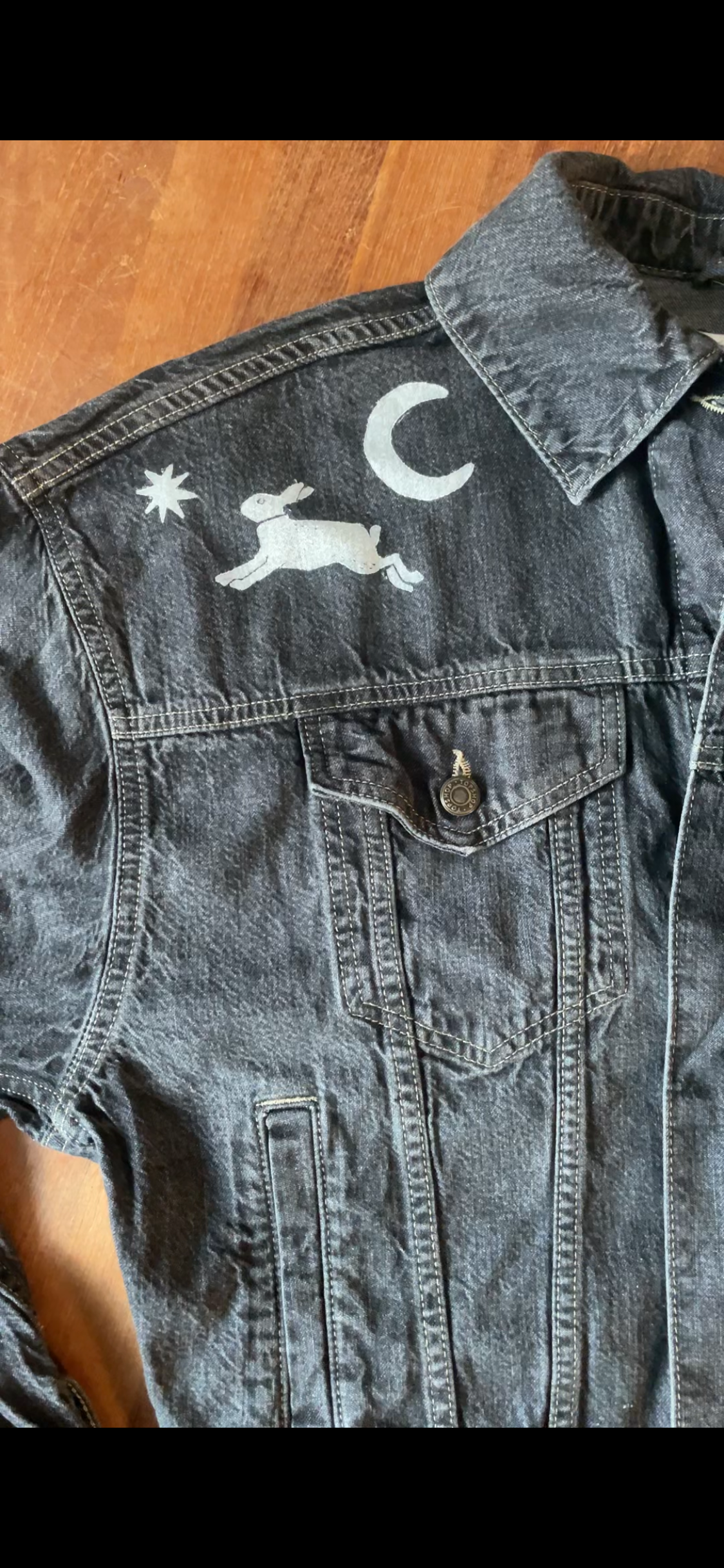
This was an improvised piece. It’s a dark jacket, and I knew I wanted to print in white on it. I also knew I wanted make it a little playful—but I couldn’t decide which stamps to use.
After contemplating for a while, I simply decided to start with one stamp. Then I added another. And another. Slowly, the composition started to take shape, until I felt it was complete.
Later on, I showed it to my husband. He said he would have added a few more stamps. A friend told me she would have printed the sun flower in full.
Key takeaway: Printing your clothes is a very personal thing. There is no universal right or wrong—only what is right (or wrong) to you.
2. The Overall I Couldn’t Rush
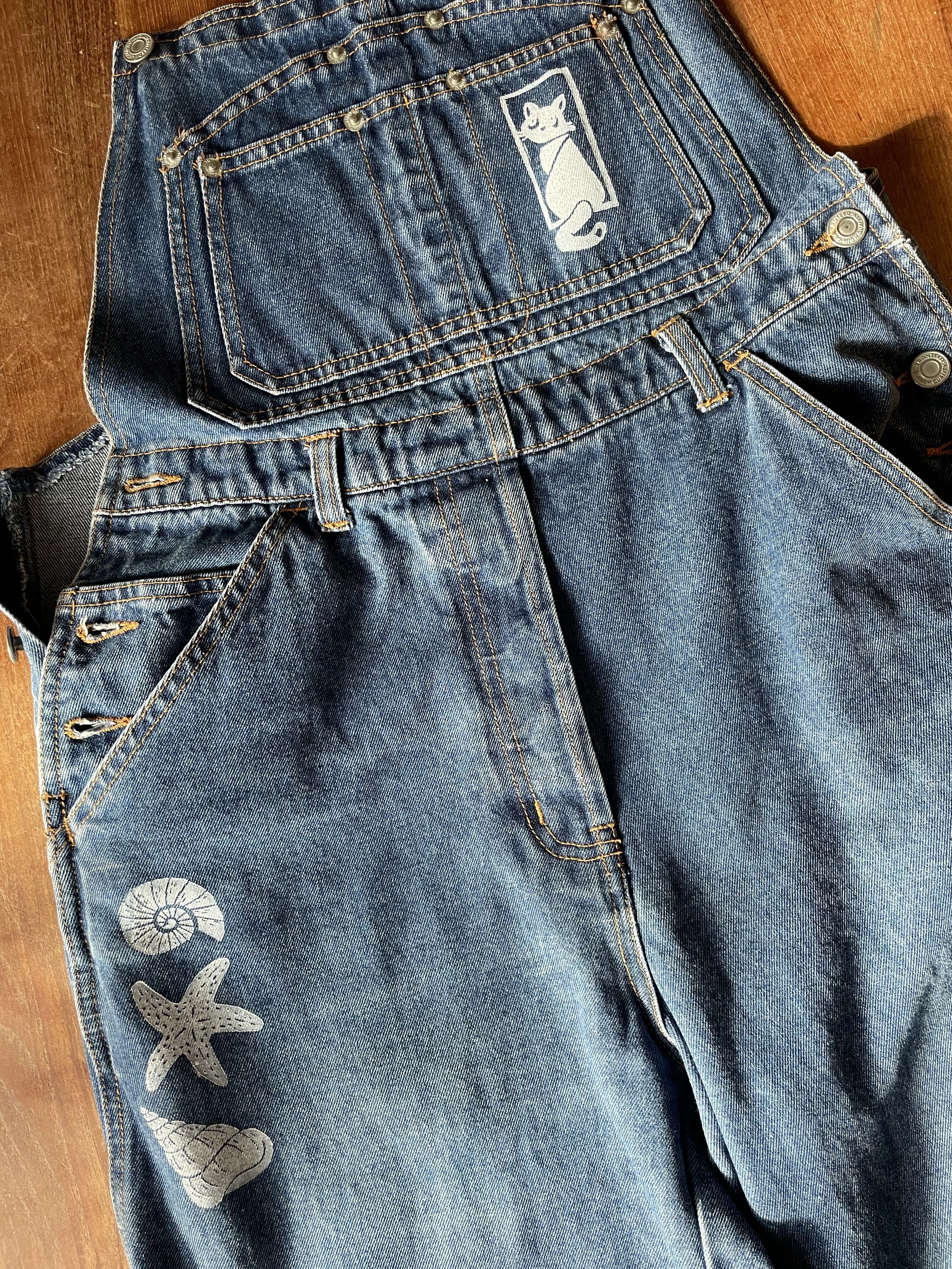
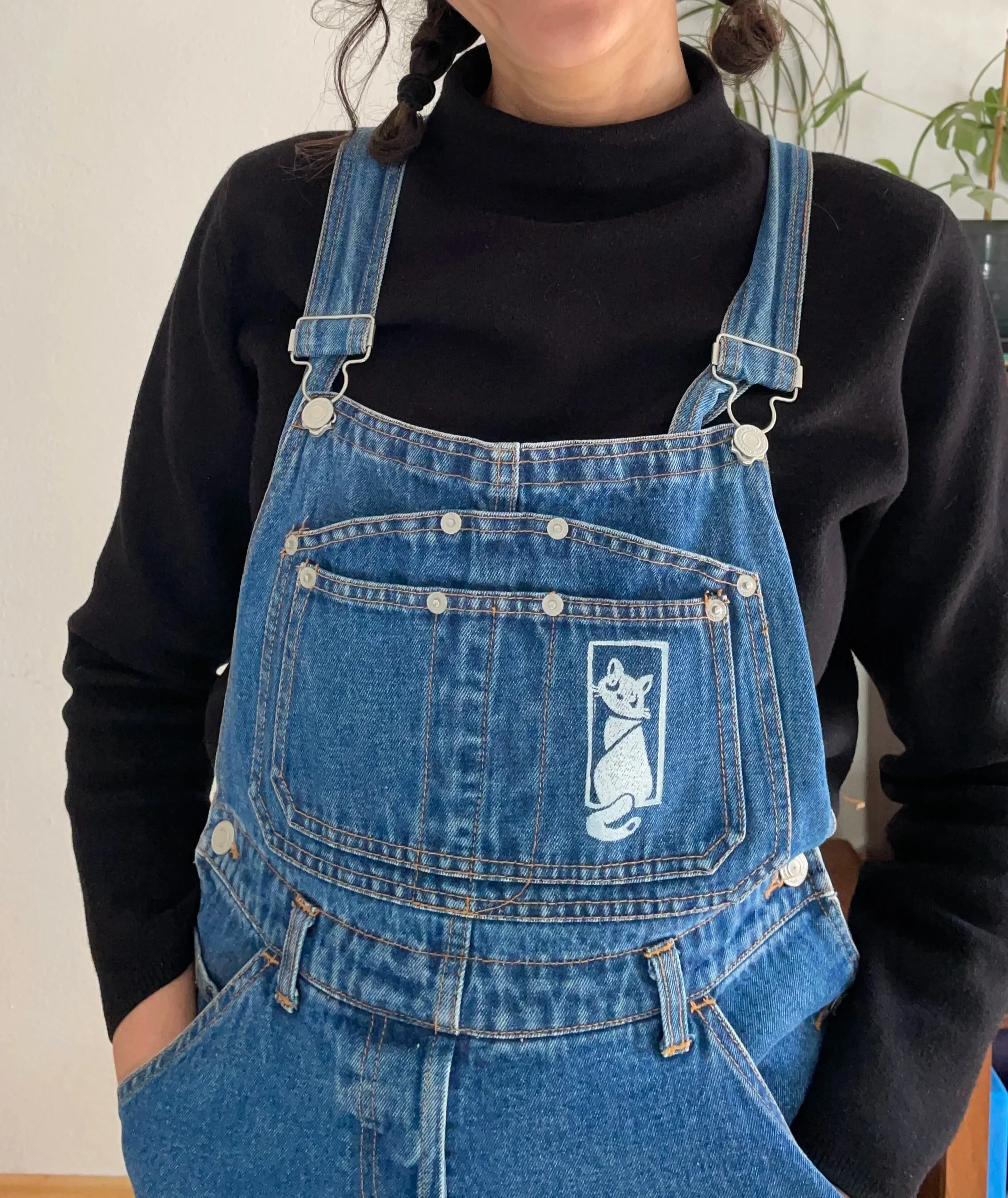
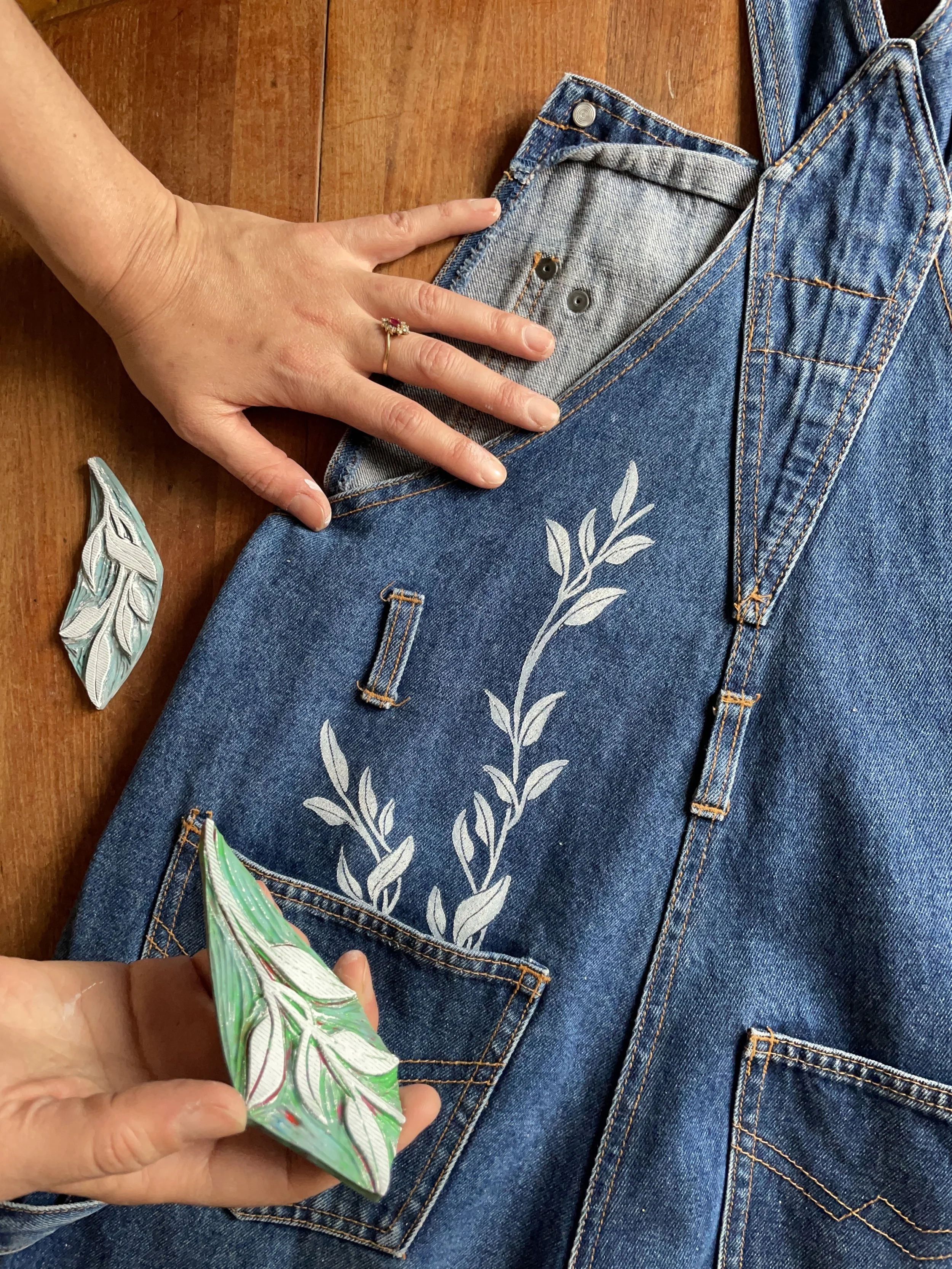
What a garment! I bought it second-hand in Budapest about 9 years ago. I’ve worn it endlessly, including half way through 2 pregnancies. I love it.
So it was about time I gave it a little print love. But because I love it so much, I was hesitant. I didn’t want to overdo it.
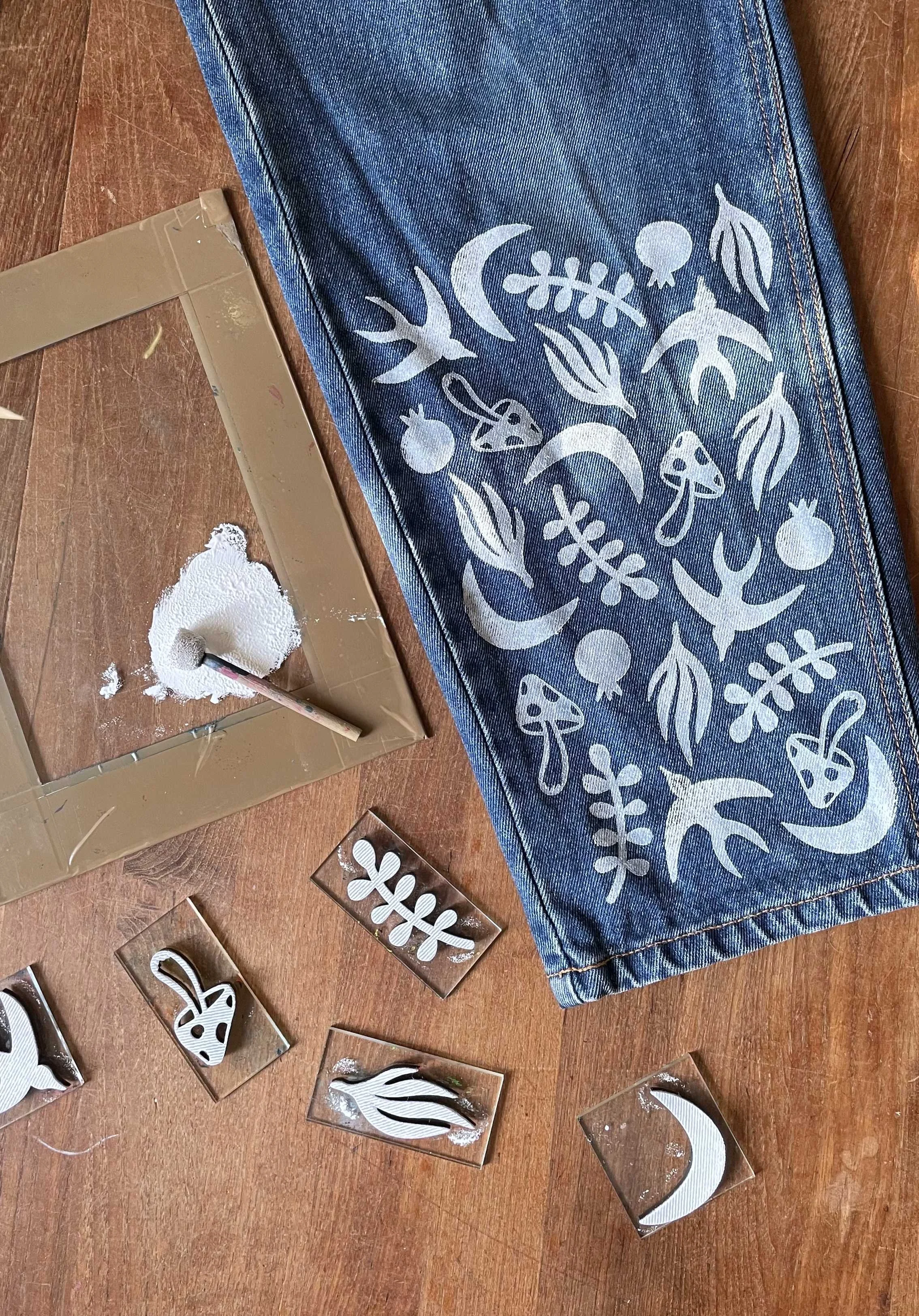
I started by printing only the bottom of one leg. A month later, I added a few more stamps. Then I painted the pocket. And now, I consider it a never-ending printing piece.
You know how some tattoo artists tattoo their own bodies over time? So think of this overall as an extension of my body—one that holds my “tattoos”.
Key takeaway: You don’t have to finish everything at once. Let your clothes evolve with you. Especially with denim - a good jeans overall can last a life time, so take your time with it.
3. The Top Everyone Had an Opinion About
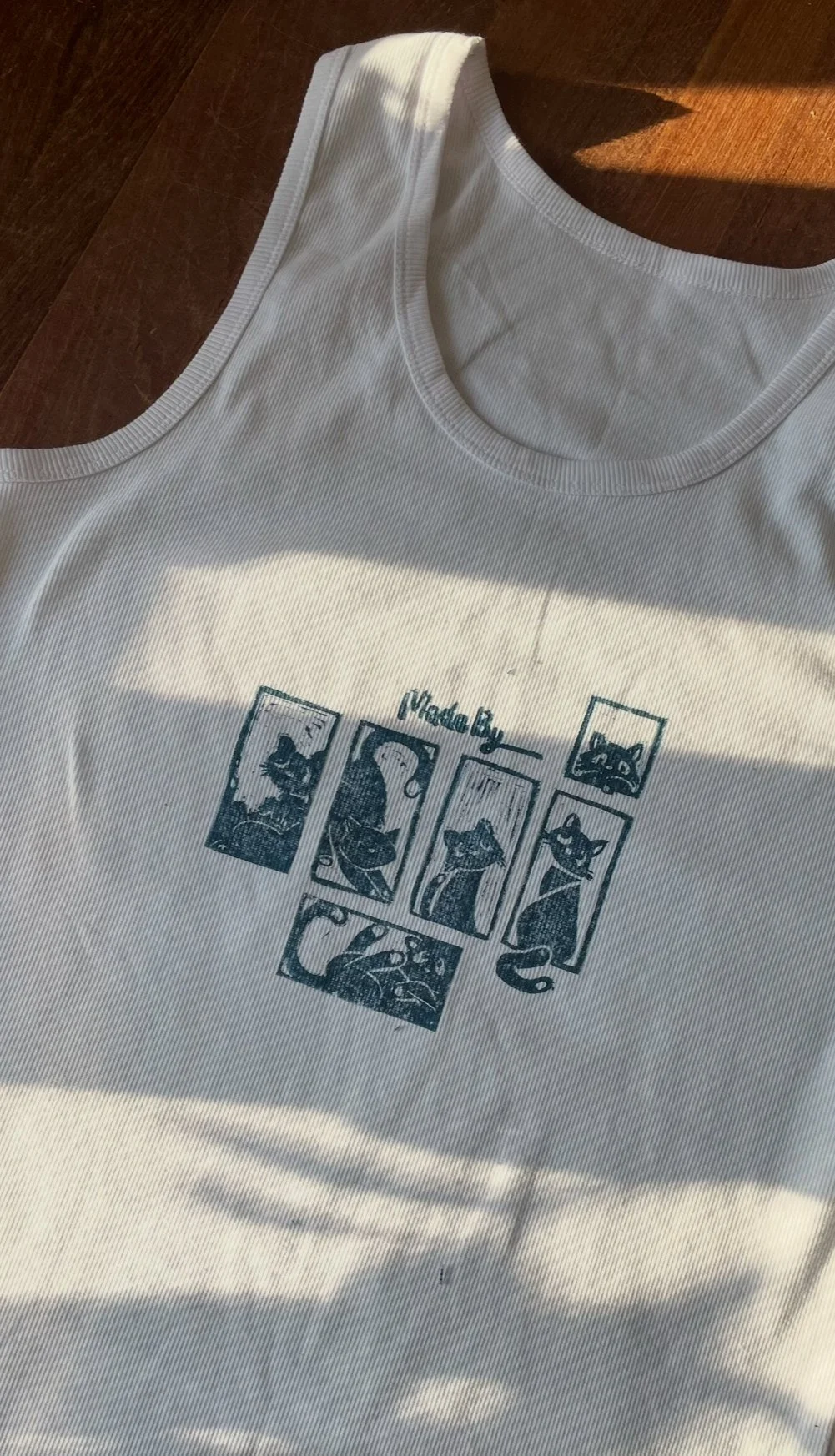
I originally printed on this shirt with my cat stamps. But since the fabric is ribbed, the prints didn’t come out well. That was a while ago—and the shirt sat in my wardrobe, untouched.
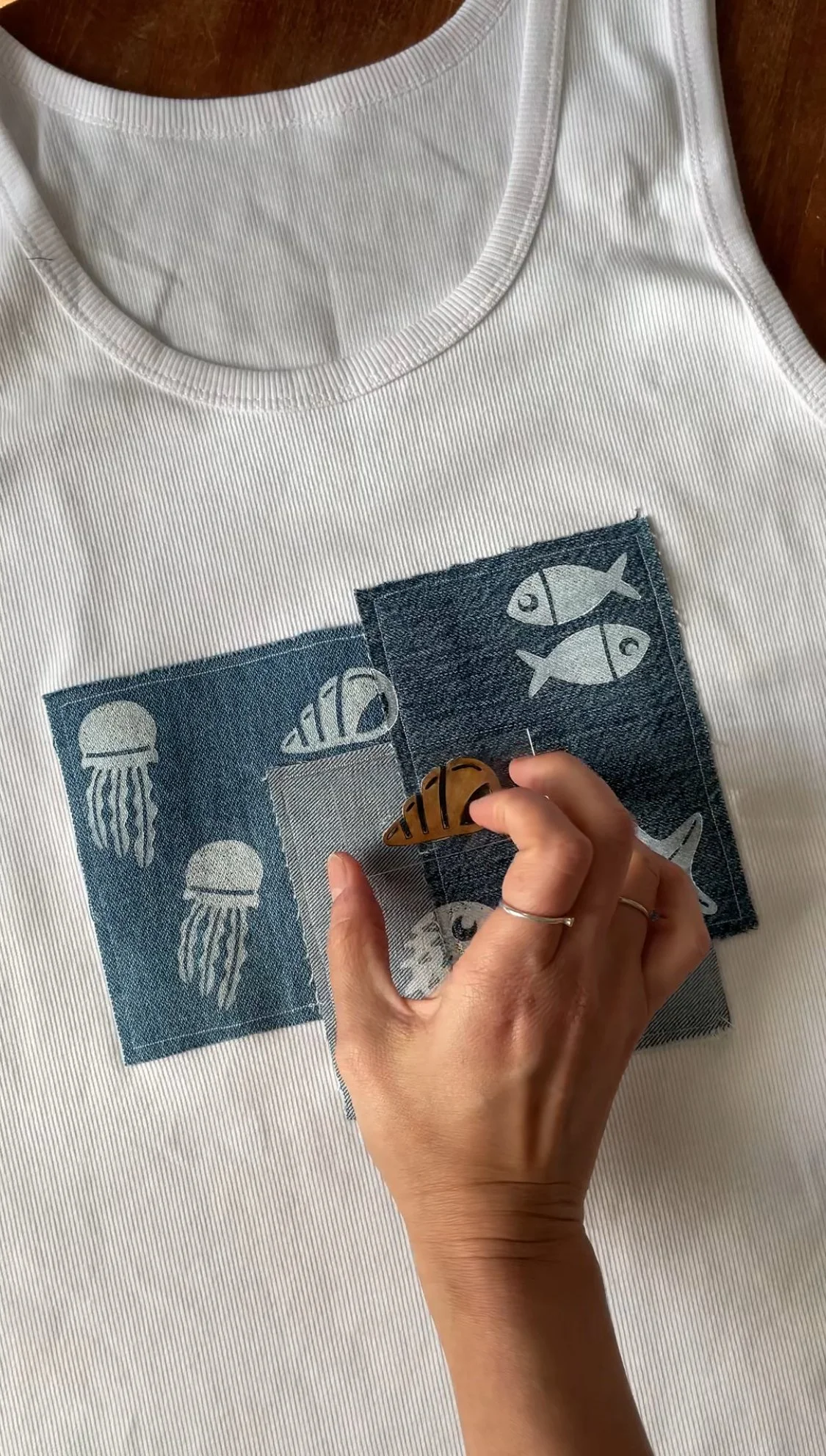
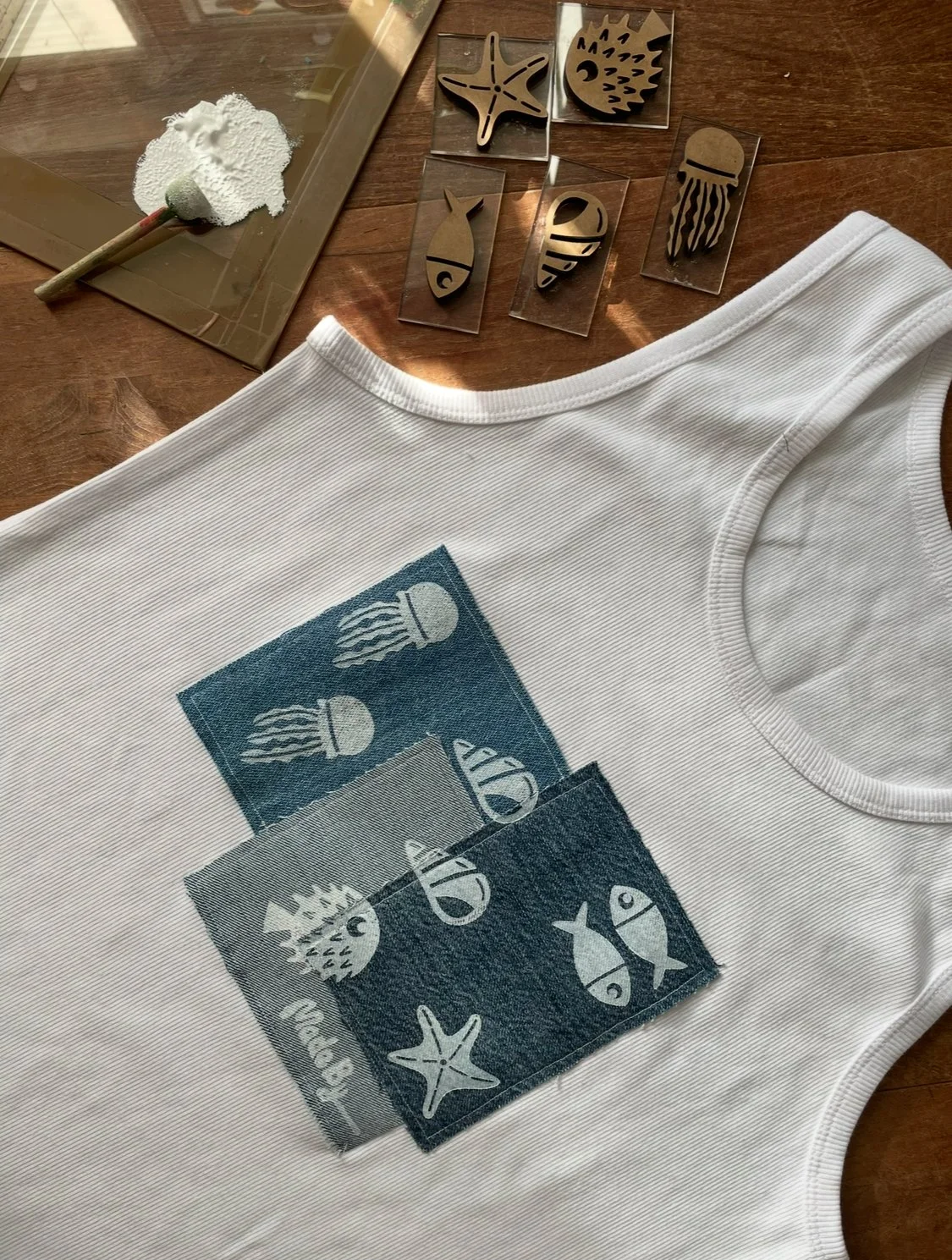
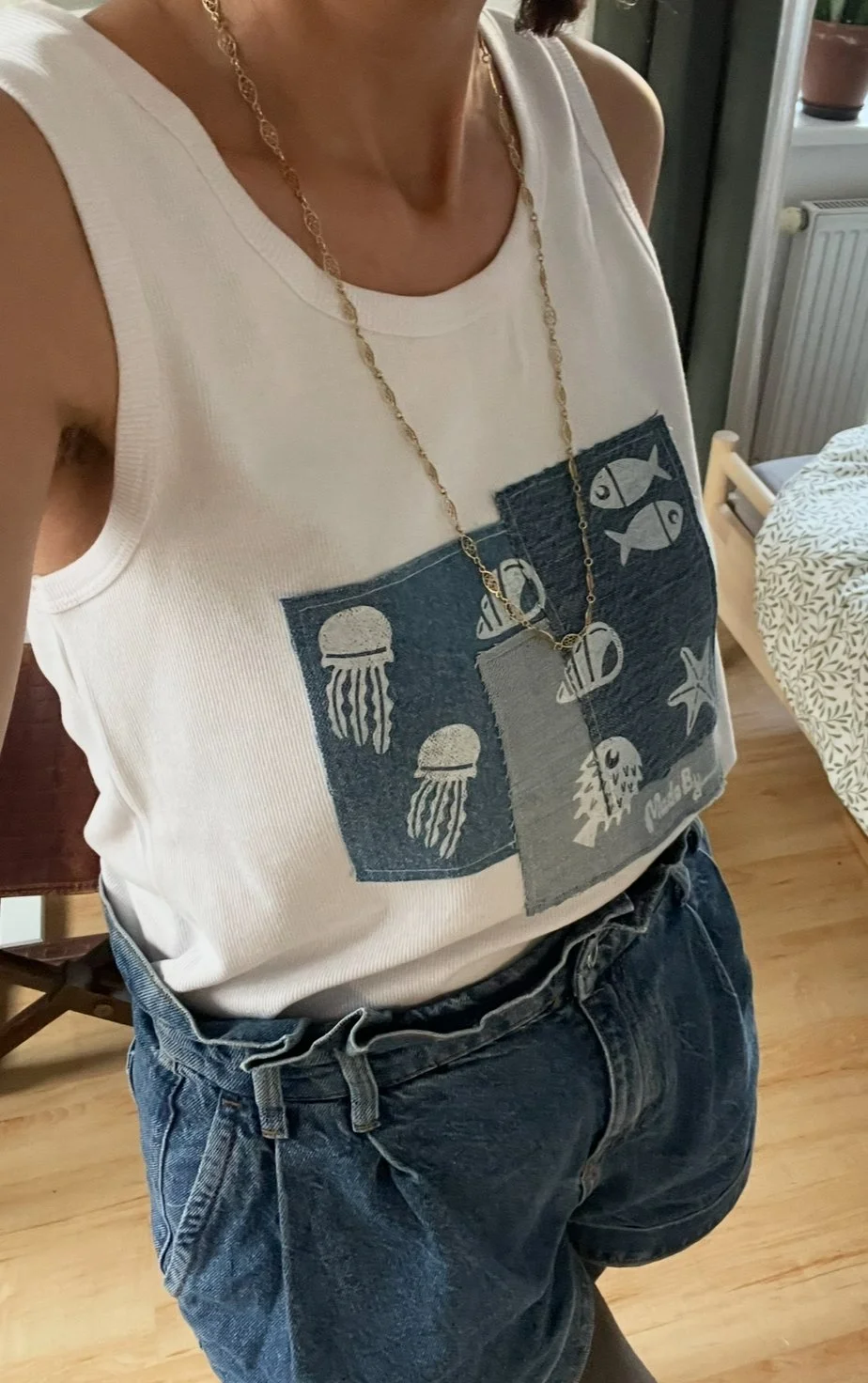
Then one day, I had this idea of to cover it with denim patches and create something entirely new. This became my fishy top 🐟
When I shared it on social media, I received all sorts of comments. Some were appreciative and encouraging. Others were… less so.
People said the denim patches would feel like a shield on my chest and make the shirt uncomfortable. They said that white ink on light denim wouldn’t hold. That the final result looked bad and I should have kept the cats.
But the colour holds beautifully. The shirt is comfortable. And thanks to the “shield” of denim patches, it’s actually great to wear without a bra. I’ve worn and washed it many times—and it’s still going strong.
Key takeaway: people say a lot of things. It doesn’t mean they’re right. Sometimes, you need to follow your instinct and trust the process.
And if my instincts had been wrong? I would have found another way to upcycle it :)
A few technical tips
Test your colours first.
Looking back at these three pieces, I realise they’re all printed in white. But denim can actually hold many colours beautifully. The important part is testing. Even if two garments look similar, the weave, wash, and fibre blend can affect how the ink sits on the surface. Always test your colour on a hidden area or scrap denim before committing to the full piece.Check the fibre content.
Denim is a strong material—especially when it isn’t blended with too many synthetic fibres. Stretch denim often contains elastane or polyester, which changes how the ink behaves and how the garment moves over time. I personally prefer working with denim that is at least 90% cotton for more predictable, stable results.Print on pieces that have already lived a little.
I like working with denim that has been warned and washed for a while. That way, I know the shape has already settled. The fabric wont shrink or twist unexpectedly after printing, and the design will stay where I intended it to be.
If you have an old denim piece sitting in your wardrobe, maybe this is your sign to give it another life.
Got any questions? Comment below ⬇️